As an Amazon Associate this site earns from qualifying purchases.
Quick Picks: Size at a Glance
| Carrier | Published capacity | Type | Suits | Link |
|---|---|---|---|---|
| INNO WEDGE660 White 11 cu ft | 11 cu ft | Low-profile hard shell | Sedans, wagons, tight garages, hatch-clearance worries | Check Price on Amazon |
| Goplus Rooftop Cargo Carrier Hard Shell | 14 cu ft, 165 lb load | Mid-size hard shell | Crossbars 17–22.8 in apart, within the stated bar limits | Check Price on Amazon |
| Goplus Rooftop Cargo Carrier Hard Shell | 14 cu ft, 165 lb load | Mid-size hard shell (second listing) | Same spec sheet, different listing page | Check Price on Amazon |
| INNO ROOF Box 466 Black 18 cu ft | 18 cu ft | Wide, large-capacity hard shell | Big SUV and minivan loads, long family trips | Check Price on Amazon |
| FIVKLEMNZ 21 Cubic Rooftop Cargo Carrier Waterproof Soft Car Roof Bag | 21 cu ft, 52 x 40 x 18 in | Soft bag | Occasional trips, vehicles with or without a rack, no storage space at home | Check Price on Amazon |
| Roof Rack Pads | 51 x 43 in | Accessory pad (not a carrier) | Paint protection under a soft bag | Check Price on Amazon |
Disclosure: We earn a small commission from qualifying Amazon purchases at no extra cost to you.
As an Amazon Associate, we earn from qualifying purchases.Last Updated: September 2026
Here's the thing about roof box shopping: the cubic-foot number on the lid — 11, 14, 18, 21 — is the spec everyone fixates on, and on its own it's close to useless. Volume doesn't tell you whether your hatch will clear the tail of the box, whether your crossbars sit inside the carrier's mounting window, or how much weight your roof is actually allowed to carry.
This guide teaches you to read the published specifications the way a careful buyer should. You'll learn what a cubic-foot rating does and doesn't promise, how low-profile and wide-body hard shells differ in practice, why crossbar spacing and width can disqualify a box before volume ever matters, and how to sanity-check a "fits X suitcases" claim with arithmetic instead of hope.
One thing up front, because it shapes everything below: this website does not do product research. Nobody here mounted, loaded or drove any of these carriers. Every product fact you'll read is traced to a published Amazon listing, and where a listing is silent, this guide says so rather than guessing.

- Perfect for Road Trip---Take the cargo box to the park, the beach, the sports field, or any place you need to store. Works on all vehicles with rack, suitable for cars, vans
- 14 Cubic Feet Cargo Box ---With the large capacity, the roof cargo box can help you securely carry 14 cubic feet worth of essentials, can increase vehicle cargo space without
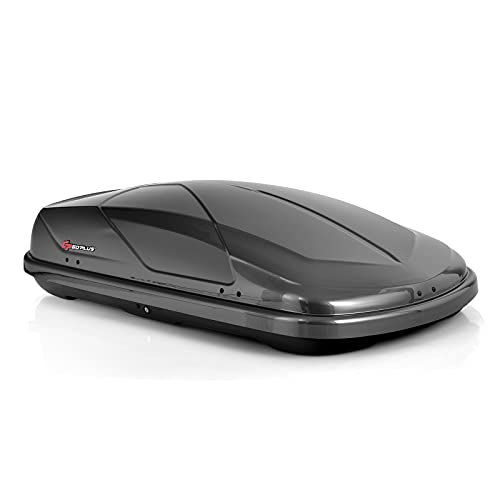
- Perfect for Road Trip---Take the cargo box to the park, the beach, the sports field, or any place you need to store. Works on all vehicles with rack, suitable for cars, vans
- 14 Cubic Feet Cargo Box ---With the large capacity, the roof cargo box can help you securely carry 14 cubic feet worth of essentials, can increase vehicle cargo space without

- LARGE CAPACITY ROOF CARGO BOX: INNO PHANTOM 466 is an 18 cu ft roof cargo box designed for carrying travel gear, outdoor equipment, skis, snowboards, and other bulky cargo on the
- DUAL-SIDE OPENING FOR EASY LOADING: This rooftop cargo carrier features dual-side opening access, allowing the cargo box to be opened from either the right or left side of the

- 【100% Waterproof & Heavy-Duty Material】 Made with upgraded durable 840D PVC material and high-frequency welded seams, features a double-layered waterproof cover, this rooftop
- 【21 Cubic Feet Extra Storage Space】 Expand your vehicle’s storage instantly. The large 21 cubic feet roof top cargo bag (52 x 40 x 18 inches) easily fits 4–6 suitcases, tents
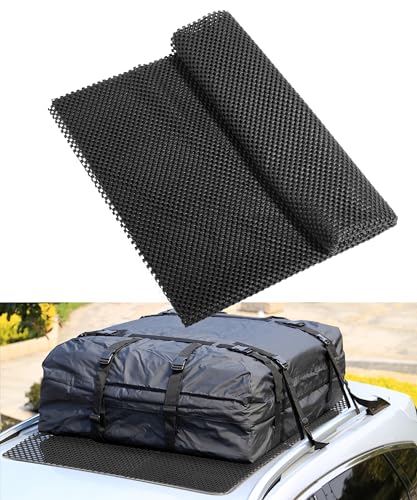
- [Durable Material] The roof protection pad is made of high-quality woven foam PVC, with a thicker thickness, wear-resistant and durable, and can be used for a long time
- [Anti Slip] Using reinforced protective pads under the roof luggage rack helps prevent cargo from slipping during transportation. Suitable for roof luggage rack crossbars, roof
Roof Box Cubic Feet Explained
A cubic-foot rating is a manufacturer's statement of interior volume, usually a gross figure. It is not a weight allowance, not a guarantee that your specific bags will nest neatly inside, and not a measurement of the footprint the box occupies on your roof.
The difference matters because roof boxes are long, shallow shapes. A 14 cubic foot box that is tall in the middle and tapered at the ends can be harder to pack than a smaller box with a more even cross-section. Volume is the headline; shape is the fine print, and most listings do not publish the internal contours.
The one place volume and dimensions are both published here is the soft bag. FIVKLEMNZ lists 21 cubic feet at 52 x 40 x 18 inches, built from 840D PVC with high-frequency welded seams and a double-layered waterproof cover. Multiply 52 by 40 by 18 inches and you get roughly 21.7 cubic feet, which lines up with the 21 cubic foot label — a useful reality check you can run on any carrier that publishes all three dimensions.
Types of Roof Cargo Carriers Explained
| Type | What defines it | Strengths on paper | Tradeoffs to weigh |
|---|---|---|---|
| Low-profile hard shell | Shallower shell, longer footprint | Locking lid, weather seal, fore/aft adjustment for hatch clearance | Least volume of the hard shells here (11 cu ft on the WEDGE660) |
| Mid-size hard shell | Roughly 14 cu ft class | Published load rating and defined crossbar window on the Goplus | Fit is conditional on your crossbar spacing and bar dimensions |
| Wide, large-capacity hard shell | Widest body, most volume | 18 cu ft, widest slide-forward range in INNO's line | Needs a vehicle and rack that can carry it; storage at home is a real problem |
| Soft cargo bag | Fabric shell, straps and hooks | 21 cu ft, folds away, listed as usable with or without a rack | No rigid shell; security and long-term abrasion are not established by the listing |
| Roof protection pad | Accessory, not a carrier | Woven foam PVC, folds small | Adds zero capacity — it is a paint-protection layer only |
The honest summary: hard shells buy you locks, structure and a sealed lid. Soft bags buy you volume per dollar of storage hassle and a carrier that fits in a closet. Neither wins outright, and the right answer usually comes down to how often you'll actually use it. If you're still deciding, our cargo bag versus hard box comparison goes deeper on that tradeoff.
Roof Box Dimensions by Family Size
Start from the gap in your packing, not from the biggest number you can afford. Work it out in this order:
- Count what won't fit inside the car. Two duffels and a stroller is a different problem from a week of luggage for five.
- Measure your longest item. Skis, tent poles and folding chairs are length problems, and length is the dimension a cubic-foot rating hides.
- Check your roof's rules before the box's rules. Your vehicle manual and your rack manufacturer each publish their own limits, and the weight of the empty carrier counts against them alongside your cargo.
- Confirm your crossbars are compatible. Spacing, bar width and bar thickness can all disqualify a carrier regardless of size.
- Then, and only then, pick a volume.
FIVKLEMNZ's own sizing note recommends 15 cubic feet for small cars, 21 for SUVs and 30 for SUVs and larger vehicles. Treat that as a seller's rule of thumb for soft bags rather than a universal standard — but it does match the general shape of the advice above.
13 vs 18 Cubic Feet: Where the Mid-Size to Large Jump Pays Off
The most common crossroads is the mid-size box against the big one. INNO publishes 11 cubic feet for the WEDGE660. Goplus publishes 14 cubic feet for its hard shell carrier. INNO publishes 18 cubic feet for the ROOF Box 466.
Step from 11 up to 18 and you are adding seven cubic feet of claimed volume — roughly a 64 percent increase on paper. That is the difference between "the overflow bags" and "most of the trip."
But bigger boxes are longer, wider or taller, and every added inch is an inch that can meet your hatch, your garage door or a parking structure. INNO addresses the hatch side of that on both models: the WEDGE660 listing describes a track design that lets you slide the box forward or back for hatch clearance while improving the weather seal, and the 466 listing claims the widest slide-forward range in INNO's line for minimal risk of hatch contact. Those are useful design answers to a real problem — they are not a promise about your specific tailgate.
Go large only if you will actually fill it. An 18 cubic foot box half-loaded still carries the full aerodynamic penalty and the full storage headache at home.
How Many Suitcases Fit in a Roof Box?
The only supplied figure here comes from FIVKLEMNZ, which claims its 21 cubic foot bag fits four to six suitcases plus tents and sleeping bags. The listing does not state what size suitcase that assumes, so treat the range as marketing shorthand.
Still, you can reason from it. If 21 cubic feet is being described as four to six cases, that implies roughly 3.5 to 5 cubic feet per case. Apply that same rate and an 11 cubic foot box lands somewhere near two to three cases, a 14 cubic foot box near three to four, and an 18 cubic foot box near four to five. That is arithmetic from one seller's claim, not a measured result — use it to set expectations, not to plan a packing list to the inch.
Practical note: roof boxes almost always pack better with soft duffels than with rigid rolling cases, because a hard case cannot conform to a tapered shell.
Key Features to Look For (Ranked by Importance)
- Crossbar compatibility. This is the gate. The Goplus listing specifies crossbar racks 17 to 22.8 inches wide, with crossbars under 3.1 inches wide and under 1.0 inch thick. Measure your bars before anything else. Our crossbar measuring guide walks through where to take the measurement.
- Load rating and weight accounting. Goplus rates its 14 cubic foot hard shell at 165 pounds of load capacity. That number is the carrier's limit; it does not raise your rack's limit or your vehicle's roof limit, and the empty carrier's weight counts against both.
- Locking and lid security. The Goplus listing describes a double-lock design, and the INNO boxes are listed with dual-side opening and locks. The safety lock on INNO's wedge boxes only releases the key once the lid is closed all the way, per the listing — a small design choice that makes a half-latched lid harder to drive away with.
- Dual-side opening. All four hard-shell listings here advertise it. On a street-parked car it's the difference between loading from the curb and loading from traffic. Note that the Goplus listing warns not to open both sides at once.
- Mounting hardware quality. Goplus says its box ships with four quick-connect anchors and a latch system to secure the lid to the base. INNO describes a memory mount system on the 466 that the listing calls the easiest installation of any cargo box on the market — that's the brand's own claim, not an independent finding.
- Weather sealing. The WEDGE660 listing ties its track design to a better seal against bad weather; FIVKLEMNZ leans on welded seams and a double-layered cover for the soft bag.
- Warranty. INNO states a limited lifetime warranty on the WEDGE660. The other supplied listings do not state a warranty length, which means unknown, not absent.
Common Mistakes to Avoid
- Buying volume before checking fit. A 21 cubic foot bag that overhangs your windshield or a box that hits your hatch is a return, not a bargain.
- Treating cubic feet as a weight allowance. Volume and weight are separate limits with separate sources — the carrier, the rack and the vehicle each publish their own.
- Forgetting the carrier's own weight. It comes off your available roof load before a single bag goes in. The INNO WEDGE660 listing does not publish a load capacity in pounds, and neither Goplus listing states the empty weight of the box, so those figures have to come from the manufacturer's manual.
- Assuming "fits most racks" means "fits yours." The WEDGE660 listing says it fits aero, square, round and most factory racks — that's broad coverage, not a universal guarantee for every factory bar on the road.
- Ignoring height clearance. Garages, drive-throughs and parking decks end more roof boxes than highway speeds do.
- Skipping the paint question on soft bags. Straps and fabric move against paint. That's exactly the gap a protection pad fills.
- Improvising a fix on the road. If a latch, strap or mount doesn't behave, stop and consult the manufacturer's instructions. Never drive with a lid or bag that isn't fully closed and secured.
Budget Considerations
Prices move constantly, so use criteria instead of a number. Ask: how many trips per year will this see, does it need to lock, and where will it live for the other fifty weeks?
A hard shell earns its keep when the box gets used often, parked in public, or loaded with gear you'd hate to lose. A soft bag makes more sense for one or two trips a year — FIVKLEMNZ's includes an anti-slip mat, luggage lock, reinforced straps, door hooks and a storage bag, and it folds away when the trip ends, which is worth real money if you have no garage wall to hang a box on.
Also budget for what the carrier doesn't include: crossbars if your vehicle lacks them, and a protection pad if you're going the soft-bag route. Check current price on Amazon before you decide — the ranking between categories shifts with promotions.
Our Top Recommendations
INNO WEDGE660 White 11 cu ft — Best for sedans, wagons and low-clearance garages
INNO's listing for the WEDGE660 gives an 11 cubic foot capacity in a low-profile hard shell that opens from both sides and locks. That listing also says the box fits aero, square, round and most factory racks, and that a track design lets you slide the box forward or back for hatch clearance while improving the weather seal.
What that combination suggests: this is the box for the buyer whose constraint is clearance, not capacity. Low profile plus fore/aft adjustment is aimed squarely at hatchbacks and sedans with limited rear swing.
Strengths: 11 cu ft in a low-profile shell; dual-side opening with locks; adjustable mounting track for hatch clearance; a safety lock that releases the key only when the lid is fully closed; INNO states a limited lifetime warranty on the WEDGE660.
Consider: it is the smallest hard shell listed here, and the INNO WEDGE660 listing does not publish a load capacity in pounds, so you'll need the manual to plan weight.
Goplus Rooftop Cargo Carrier Hard Shell — Best for mid-size hauls on measured crossbars
Goplus rates its 14 cubic foot hard shell at 165 pounds of load capacity. The listing specifies crossbar racks 17 to 22.8 inches wide, with crossbars under 3.1 inches wide and under 1.0 inch thick — one of the more precise fit windows in this group, which makes pre-purchase verification straightforward.
Goplus says the shell is ABS and PC with metal lid stiffeners at the bottom and a double-lock design. It ships with four quick-connect anchors, and the listing warns not to open both sides at once and notes the key only comes out once the lid is closed and locked.
Strengths: published 165 lb load rating; explicit crossbar compatibility range; dual-side opening; double-lock security.
Consider: the fit window is a hard constraint — if your bars sit outside 17 to 22.8 inches, this isn't your box. Neither Goplus listing states the empty weight of the box.
Goplus Rooftop Cargo Carrier Hard Shell — Best for buyers who find the second listing better stocked
The second Goplus listing publishes the same 14 cubic feet, the same 165 pound load capacity and the same 17 to 22.8 inch crossbar window. The supplied listing text is identical on both pages, including the ABS and PC construction, metal lid stiffeners, double-lock design and four quick-connect anchors.
Why it's here: duplicate Amazon listings for the same carrier are common, and availability or finish can differ between them even when the specifications don't. If the first page is out of stock, check this one against the same crossbar measurements.
Strengths: identical published spec sheet to its twin listing, including the 165 lb load rating and defined crossbar range.
Consider: the supplied listing text does not state what, if anything, distinguishes this page from the other — assume nothing about color or bundle until the listing page itself tells you.
INNO ROOF Box 466 Black 18 cu ft — Best for full family loads on a large SUV or minivan
INNO rates the ROOF Box 466 at 18 cubic feet and calls it the largest volume cargo box in its own lineup. The 466 listing describes a gross finish with a chrome emblem and handle, dual side opening, a memory mount system INNO calls the easiest installation of any cargo box on the market, and the widest slide-forward range in its line for minimal risk of hatch contact.
Read that last point carefully, because it's the argument for this box over a generic large shell: a wide-body carrier is exactly the one most likely to interfere with a tailgate, and the extra slide range is the design answer to that.
Strengths: the largest published volume of the hard shells here at 18 cu ft; dual-side opening with locks; wide slide-forward adjustment range.
Consider: the INNO ROOF Box 466 listing likewise does not publish a load capacity or an empty weight, and an 18 cubic foot wide body demands both a rack that can carry it and somewhere to store it off-season.
FIVKLEMNZ 21 Cubic Rooftop Cargo Carrier Waterproof Soft Car Roof Bag — Best for occasional trips and cars without a rack
FIVKLEMNZ lists 21 cubic feet at 52 x 40 x 18 inches, built from 840D PVC with high-frequency welded seams and a double-layered waterproof cover. It includes ten reinforced straps, six door hooks, an anti-slip mat, a luggage lock and a storage bag, and the listing says it works on vehicles with side rails, crossbars or no rack at all. The brand claims it fits four to six suitcases plus tents and sleeping bags.
This is the highest published volume in the group, and it packs down when the trip is over — the strongest argument for a soft bag over a shell if you travel once or twice a year.
Strengths: 21 cu ft, the largest published capacity here; welded seams and a double-layered cover; complete strap, hook, mat and lock kit included; listed for vehicles with or without a rack.
Consider: included straps and hooks do not establish a proper installation on every vehicle or for every load — confirm the mounting against your own roof and your vehicle's guidance. Fabric doesn't lock like a shell, and the listing does not state a load capacity in pounds.
Roof Rack Pads, 51"x43" Rooftop Cargo Bag Mat — Best for protecting paint under a soft cargo bag
To be clear: this is an accessory, not a carrier, and it adds no capacity. The pad measures 51 by 43 inches, is made of woven foam PVC, and folds or rolls down small enough that the seller says it stores in a glove box.
The listing positions it as an anti-slip layer under roof bags, boxes, baskets and crossbars to help prevent cargo slipping and to keep the roof from being scratched. If you're going the soft-bag route, that's the specific failure mode this is aimed at.
Strengths: 51 x 43 in coverage; woven foam PVC; folds for storage; sold as compatible with crossbars, racks, baskets and roof boxes.
Consider: a stated 51 by 43 inch size and "fits most vehicles" is not confirmation of fit under your specific carrier footprint — compare it against your roof and bag dimensions first.
How to Get the Best Deal on Amazon
- Verify fit before you chase a discount — a cheap box that misses the 17 to 22.8 inch crossbar window on the Goplus is not a deal.
- Compare duplicate listings for the same carrier. The two Goplus ASINs here publish identical specifications, and duplicate pages can differ in availability.
- Watch seasonal timing. Demand for cargo carriers tracks travel seasons, so shoulder months are worth a look.
- Read the current listing page before buying. Specifications and bundle contents are updated by sellers over time.
- Check the return window against your delivery date, so you have time to trial-fit the carrier on your rack.
Maintenance and Care Tips
- Rinse road salt and grit off a hard shell before storing it; abrasive residue sitting on a painted lid all winter does nothing good.
- Store a hard box on its base or on a proper wall hanger — never balanced on a lid edge or with weight resting on the shell.
- Fold a soft bag dry. Packing wet PVC away invites mildew on the seams.
- Inspect straps, hooks, latches and mounting hardware before every trip, and re-check them at your first fuel stop.
- If a latch, seal or mount doesn't operate correctly, stop using the carrier and follow the manufacturer's instructions or service channel. Do not improvise a repair from a product listing.
- Keep the keys somewhere other than the box. On the INNO wedge boxes, the key only comes out once the lid is fully closed, which at least makes an unlatched lid obvious.
How We Research
This site is specification-driven. For this guide, the source material was Amazon Creators API verified product records and the product listing feature bullets published on each carrier's Amazon page, retrieved 11 September 2026.
The work consisted of reading those published specifications closely, comparing only like-for-like attributes across them, doing arithmetic where the listings gave enough dimensions to check a claim, and flagging every field the listings leave unstated rather than filling it from assumption. No product was mounted, loaded, weighed or driven for this article, and this site operates no lab.
For general consumer safety context, the U.S. Consumer Product Safety Commission publishes product recall and safety information. USA.gov's consumer protection pages explain how to file a complaint about a defective product.
Frequently Asked Questions
Is 11 cubic feet enough? For a couple, a small family topping up a trunk, or ski and snowboard overflow, yes. INNO publishes 11 cubic feet for the WEDGE660 in a low-profile shell, and low profile is the point — it's aimed at cars where clearance, not capacity, is the binding constraint.
How much weight can a roof box hold? That depends on three separate limits: the carrier's rating, your rack's rating and your vehicle's roof load limit. Goplus rates its 14 cubic foot hard shell at 165 pounds of load capacity; the INNO listings supplied here do not publish a load figure, so check the manufacturer's manual and always count the empty carrier's weight against your rack and vehicle limits.
Is a soft cargo bag as good as a hard box? They solve different problems. FIVKLEMNZ's soft bag lists the largest capacity here at 21 cubic feet and folds into an included storage bag, while hard shells offer a rigid, locking shell. The supplied listings don't establish comparative durability or security between the two formats.
Do I need crossbars for a roof cargo carrier? For the hard shells here, yes — the Goplus listing states it is for vehicles with a rack. The FIVKLEMNZ bag is listed as working on cars, SUVs, vans and trucks with side rails, crossbars or no rack at all, using its included straps and door hooks.
Will a roof box hit my hatch when it opens? It can, which is why adjustment range matters. The WEDGE660 listing describes a track that slides the box forward or back for hatch clearance, and INNO says the ROOF Box 466 has the widest slide-forward range in its line for minimal risk of hatch contact. Neither is a guarantee for a specific vehicle — trial-fit and open the hatch slowly the first time.
Do I need a roof protection pad? It's worth considering with a soft bag. The 51 by 43 inch woven foam PVC pad is sold as an anti-slip, anti-scratch layer under roof bags, boxes and baskets, and it folds down for storage.
Final Verdict
If you want one opinionated answer: most buyers overbuy. Pick the smallest carrier that clears the gap in your packing, because every extra cubic foot is extra length, extra height and extra storage hassle for the fifty weeks you aren't on a road trip.
For a sedan, wagon or a garage with marginal clearance, the INNO WEDGE660 White 11 cu ft is the logical pick — 11 cubic feet in a low-profile shell with an adjustable track for hatch clearance and a limited lifetime warranty stated by INNO. For a family that genuinely fills a box and drives a large SUV or minivan, the INNO ROOF Box 466 Black 18 cu ft is the one to look at, because 18 cubic feet paired with the widest slide-forward range in INNO's line addresses the exact problem wide boxes create. If your crossbars land between 17 and 22.8 inches and you want a published load figure to plan against, the Goplus Rooftop Cargo Carrier Hard Shell's 165 pound rating gives you a number to work with. And if you travel twice a year and have nowhere to store a shell, the FIVKLEMNZ 21 Cubic Rooftop Cargo Carrier Waterproof Soft Car Roof Bag's 21 cubic feet and fold-away kit is the pragmatic choice.
Whatever you pick, measure your bars, check your vehicle's roof limit and trial-fit before the trip. For model-by-model detail, see our roundup of rooftop cargo boxes.
Sources and Methodology
No roof box on this page was physically mounted, loaded, weighed or road-tested by this website, and no laboratory work stands behind any statement above. What this guide is built on is close reading of Amazon Creators API verified product records and the sellers' own product listing feature bullets for each ASIN, retrieved 11 September 2026 — comparing published capacities, stated crossbar and load limits, mounting hardware descriptions and dimensions against one another, and running arithmetic on the figures the listings actually publish.
For sizing decisions, that is genuinely enough: capacity ratings, crossbar compatibility windows and stated load limits are exactly the specifications that determine whether a carrier fits your rack and your packing list. What it cannot tell you is how a seal holds up after five winters or how a fabric bag wears at the strap points — for those, the manufacturer's manual and your own inspection remain the authority.